
Two quotes for the same house can differ by thousands and both be honest. The difference is almost never the plank. It is what each one assumed about the floor underneath, and what each one left for you to discover later.
Preparation
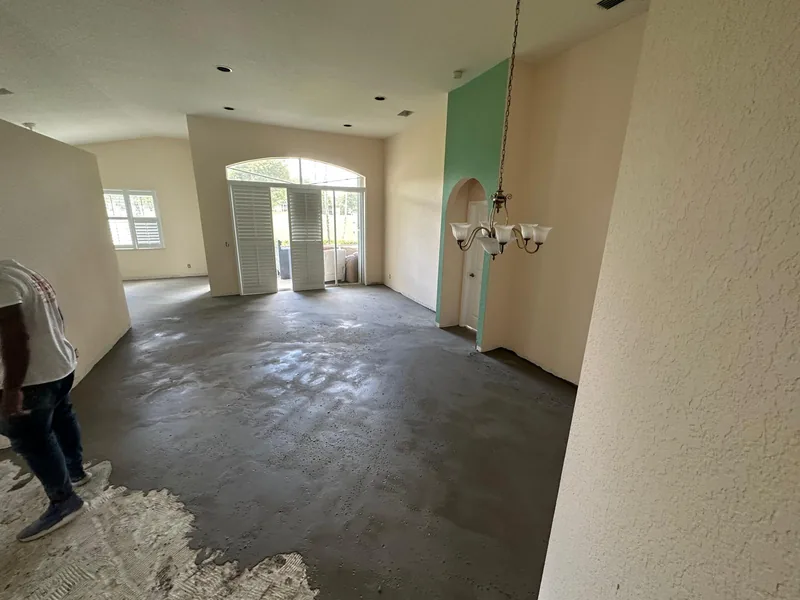
Removal, disposal, substrate repair and leveling should be explicit. These conditions often decide schedule and final quality.
This is the single largest source of difference between two quotes for the same house. One assumes the existing floor comes up cleanly and the slab underneath is sound. The other assumes it does not. Both are guesses until the floor is opened, but only one of them tells you it is guessing.
Ask what happens if the substrate turns out to need more work than assumed. A quote that has an answer for that has thought about your house. A quote that does not will produce a change order in week two, and by then you have no leverage and no alternative.
Also ask who takes the old material away and what that costs. Disposal is real weight, real trips and real fees, and it is one of the easiest line items to leave out of a number that needs to look competitive.
Materials and transitions
Confirm product quantity, waste allowance, trims, stairs, door clearances and transitions between rooms.
Waste allowance is where quantity quietly becomes a problem. Every installation loses material to cuts, and a diagonal layout, an irregular room shape or a lot of doorways loses more. If the allowance is too thin, the job stops mid-run waiting on material that may no longer be available from the same production batch, and a floor completed from two batches can read as two slightly different floors.
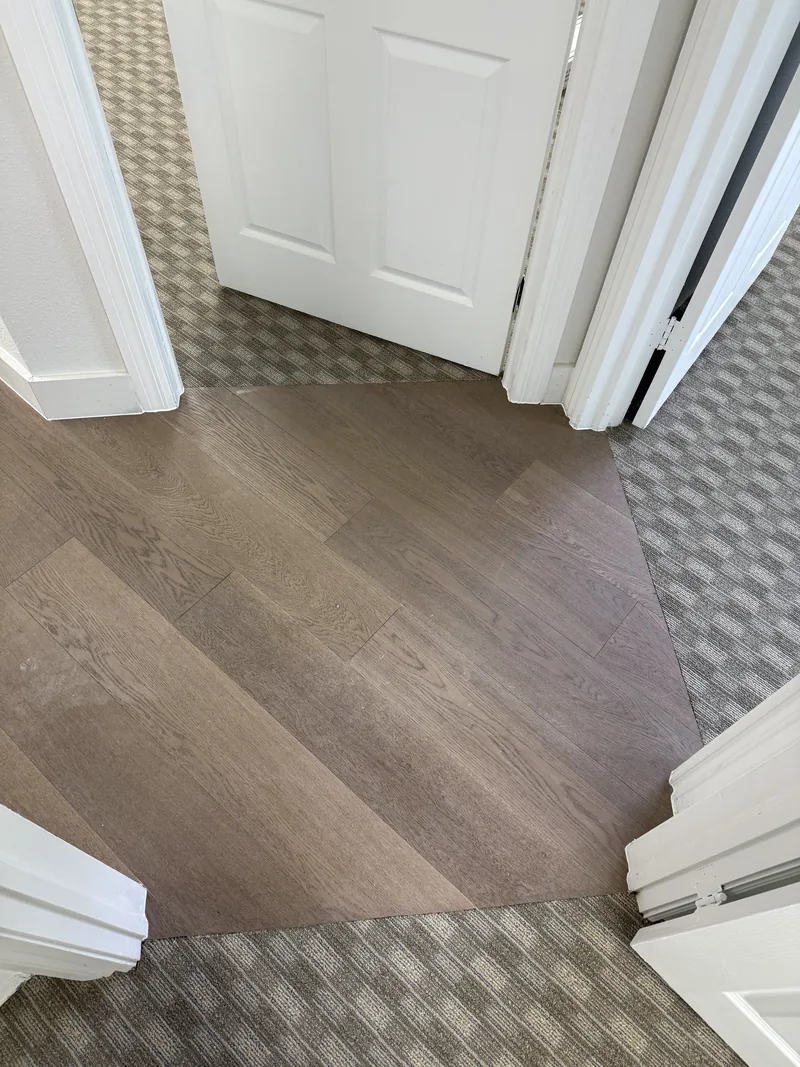
Transitions are the second gap. Every doorway, every step, every place where the new floor meets tile, carpet or an exterior threshold needs a piece, and each of those pieces is a decision about height, material and how the line will look. A quote that lists a square-foot price and nothing else has left all of that unpriced.
Stairs deserve their own line. They are the most labor-intensive part of most residential jobs and the part most likely to be quoted as an afterthought.
Responsibilities and handoff
The quote should identify who moves furniture, protects adjacent areas, performs final cleaning and reviews the completed work.
Furniture is the one that surprises people. Moving a house room by room is labor, and if the quote does not say who does it, the answer on the first morning is you. The same applies to disconnecting appliances, removing doors that no longer clear the new floor height, and putting all of it back.
Protection matters more than it sounds. Work generates dust and traffic, and adjacent finished areas either get covered or get damaged. A scope that includes protection is telling you it expects to be judged on the whole house, not only on the room it was hired for.
Finally, ask how the work gets accepted. A named walkthrough, with someone who can make decisions, at a defined point, is the difference between a punch list that gets closed and a list of small things you live with.
How to compare two numbers that are not comparable
Put the quotes side by side and mark every line that appears in one and not the other. That list, not the total, is what you are actually deciding between.
If one quote is meaningfully lower and the missing lines are preparation, disposal, transitions and furniture, it is not lower. It is incomplete, and the difference will arrive later as a change order, at a moment when saying no is expensive.
The useful question to ask every bidder is the same one: what did you assume about the slab, and what happens if you are wrong? The answer tells you more about how the project will go than any number on the page.